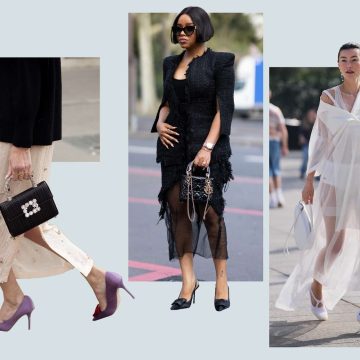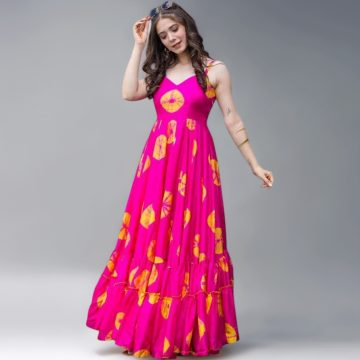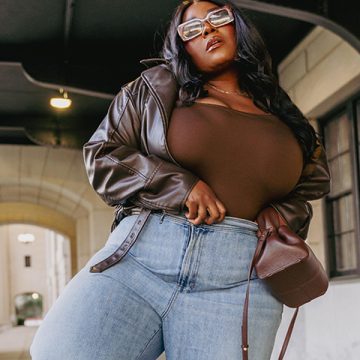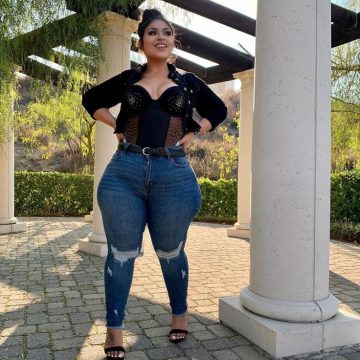



Standard retail sizing operates on an idealized geometric fiction. Mass apparel manufacturing relies on standardized grading scales developed decades ago, built on the assumption that human bodies scale outward and upward in uniform, predictable increments. In the real world, bodies do not grow or shrink along a neat linear vector. If your waist measures a size 8 while your hips align with a size 12, or your shoulders require an extra-large while your torso drowns in anything bigger than a medium, shopping off the rack can feel like a relentless cycle of compromises.
Being between sizes is not an anomaly or a personal failure; it is the inevitable mathematical consequence of industrial pattern grading. To consistently find garments that look intentional and feel comfortable, you must stop treating tag numbers as definitive directives. Navigating the gap between standard sizes requires understanding garment construction, leveraging fabric behavior, and shifting your approach from passive consumer to deliberate curator.
The Structural Flaws of Off-the-Rack Sizing
To solve the fit problem, you first need to recognize why the system fails you. Apparel brands build their patterns around a single fit model, typically an industry-standard sample size such as a women’s 6 or a men’s medium. Once that prototype fits the live model, computer algorithms apply grading rules to scale the pattern up and down. These algorithms assume that when a waist expands by two inches, the neck circumference, armhole depth, sleeve length, and rise must all expand proportionately.
This mechanical scaling creates massive distortions at the edges of every size bracket. A size 10 is rarely just a slightly broader size 8; it frequently features deeper armholes, wider shoulder points, and longer torso lengths that completely throw off the garment balance for someone who merely needed an extra half-inch around the ribs.
Compounding this mechanical issue is the prevalence of alpha sizing (XS through XXL). While numerical sizing typically increases in one- to two-inch increments, alpha sizing frequently lumps three to four inches of body variance into a single designation. When a brand replaces distinct numerical options with small, medium, and large, the dead zone between sizes widens dramatically. Add vanity sizing into the mix—where a size 32 waist in one brand measures an actual 35 inches on the tape—and reliance on garment tags becomes practically useless.
Shift from Tag Numbers to Garment Measurements and Ease
The most effective way to eliminate sizing confusion is to anchor your purchases to measurable dimensions rather than arbitrary numbers. Keep a soft measuring tape in your dresser and record your four core metrics: chest or bust at the fullest point, natural waist at the narrowest point, low hip at the widest point of your glutes, and your natural inseam.
Knowing your body measurements is only half the equation; you must also understand garment ease. Ease is the difference between your physical body measurements and the actual dimensions of the finished clothing item.
Wearing Ease vs. Design Ease
Every non-stretch woven garment requires a baseline of wearing ease simply to allow your lungs to expand, your arms to move, and your hips to sit without tearing the seams. For trousers and skirts, standard wearing ease is roughly one to two inches at the hip and half an inch to an inch at the waist. In a tailored jacket or button-down shirt, chest ease should typically sit between two and four inches.
Design ease, on the other hand, reflects the stylistic intent of the designer. An oversized trench coat might include eight to ten inches of design ease across the chest, meaning you could comfortably size down without sacrificing the intended look. Conversely, a bodycon dress or a pair of compression leggings features negative ease, where the garment measures smaller than your body and relies entirely on fabric elasticity to stretch over your contours. When shopping online, always check the garment specifications for actual finished dimensions rather than relying solely on the generic body size chart.
The Strategic Decision: When to Size Up and When to Size Down
When your measurements fall directly between two options, guessing becomes an expensive gamble. Making the correct choice depends on two decisive factors: fabric composition and the structural complexity of the garment.
When You Must Size Up
Always size up when the garment is made from 100% rigid, non-stretch materials such as raw denim, crisp poplin, linen, silk, or wool gabardine. Non-stretch woven fabrics offer zero forgiveness. If a pair of rigid cotton jeans is three-quarters of an inch too small in the hips, they will pull across the front whiskers, flatten your rear, and stress the pocket seams regardless of how well the waistband fits.
Furthermore, you should size up whenever the tighter area corresponds to a structural anchor point that cannot be altered easily. These include:
-
The shoulder seam and armscye: The seam where the sleeve joins the shoulder dictates how the entire garment hangs. Widening an armhole or expanding a tight shoulder requires inserting fabric panels, which ruins the garment lines.
-
The rise and crotch curve: Trousers that pull upward or cut into your stride cannot be lengthened without existing seam allowance, which modern mass-market garments almost never provide.
-
The chest and bust apex: Button-front shirts that gape across the sternum reveal that the chest circumference is fundamentally too narrow. Let the shirt fit your broadest point, then tailor the excess fabric inward.
When You Can Safely Size Down
Sizing down is feasible when the garment features built-in mechanical stretch or elastane blends. A knit sweater, ribbed tee, or jersey dress naturally conforms to transitional body shapes without strain. Trousers containing two to three percent elastane will relax slightly after twenty minutes of body heat and movement, making the smaller of two adjacent sizes the superior long-term choice.
You can also size down on garments with substantial design ease, such as boxy utilitarian overshirts, unstructured chore jackets, and A-line skirts. In these styles, the extra volume provided by the larger size often overwhelms the shoulders and collar, making the piece look sloppy rather than styled.
Embrace Proportional Lines and Modular Silhouettes
If you are consistently stranded between standard sizes, your body architecture likely deviates from the standard hourglass or rectangle ratios used by commercial pattern makers. Instead of fighting standard patterns, seek out specialized design categories engineered for non-average proportions.
Curvy and Athletic Cuts
The fashion industry historically defined standard women’s trousers with a nine- to ten-inch difference between waist and hip circumference. However, modern curvy fit collections are specifically cut with an eleven- to thirteen-inch difference, incorporating a narrower waistband, a contoured back seam, and extra room through the hip and thigh. This engineering completely eliminates the frustrating waistband gap without forcing you to buy a larger size that sags everywhere else.
Similarly, athletic fit menswear provides broader room through the quads, seat, and chest while tapering sharply at the waist and ankles, resolving the perpetual issue faced by people with developed musculature who cannot fit into slim cuts or look swallowed by relaxed cuts.
Adaptable Structural Elements
Prioritize garments that feature mechanical adaptability built directly into their construction. Look for trousers featuring interior drawstring adjusters, hidden elastic inserts along the rear waistband, or side tabs. Wrap tops, tie-front dresses, and belted trenches allow you to dictate the waist cinch manually, accommodating fluctuations in fit without distorting the silhouette. Raglan and drop-shoulder sleeves completely bypass standard shoulder-width restrictions, offering an effortless drape regardless of your frame width.
The Tailoring Mindset: Finishing the Final Ten Percent
The single biggest misconception in retail shopping is that ready-to-wear clothing is supposed to fit perfectly straight off the rack. It is not. Ready-to-wear is mass-produced raw material designed to fit the statistical middle of a bell curve. High-end personal style is almost never a matter of lucking into a magical brand; it is the result of taking an item that fits your widest dimension and paying a professional to adjust the rest.
Budgeting an extra fifteen to thirty dollars per garment for simple alterations unlocks a completely different tier of fit. The most cost-effective and transformative alterations include:
-
Taking in the waist: A tailor can easily open the waistband of trousers or skirts and remove one to two inches from the center-back seam, eliminating the gaping hole behind your lower back.
-
Adding or deepening darts: Simple vertical darts placed along the back of a boxy button-down or jacket instantly pull in excess fabric and create subtle contouring.
-
Shortening straps and hems: Raising the shoulder straps of a tank or dress elevates the entire bustline to its correct anatomical position, instantly curing armhole sag.
When you shop with the intention of tailoring, your purchasing criteria become refreshingly simple: ensure the shoulders, collar, and rise fit comfortably, and view all other excess fabric as easily adjustable material.
Practical Strategies for Modern Online Shopping
Online shopping presents the highest risk for people between sizes, but strategic vetting can significantly reduce returns.
First, ignore the primary promotional photographs and look closely at customer reviews that include reviewer measurements. Pay attention to comments noting whether an item runs small or stretches out during the day. If multiple reviewers mention that a waistband feels rigid or that the armholes run high, trust those practical observations over the marketing copy.
Second, establish relationships with brands that offer split sizing or odd-numbered increments. Men’s trousers sold in one-inch waist increments (such as 31, 33, and 35) bridge the gap that standard two-inch jumps leave behind. Women’s swimwear, suiting, and formalwear that sell separates rather than bundled sets allow you to select disparate sizes for your upper and lower halves without compromise.
Finally, normalize bracket ordering when trying a new brand or an unfamiliar cut. Ordering two adjacent sizes with the explicit intention of immediately returning the ill-fitting one is often the only way to accurately evaluate where a brand’s pattern grading falls against your specific frame. Test both sizes while sitting, bending, and reaching to verify that comfort remains stable through natural daily movement.
Navigating the space between sizes requires rejecting the notion that your body needs to conform to an arbitrary tag. Clothes exist to serve your comfort and present your frame with poise. When you prioritize structural anchor points, decode garment ease, and use minor tailoring to bridge the manufacturing gap, you gain complete control over your personal style.