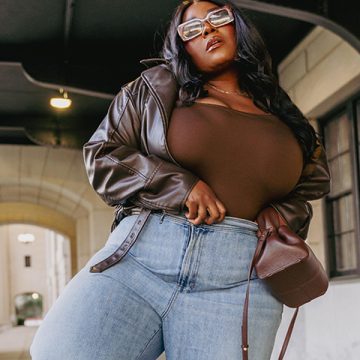



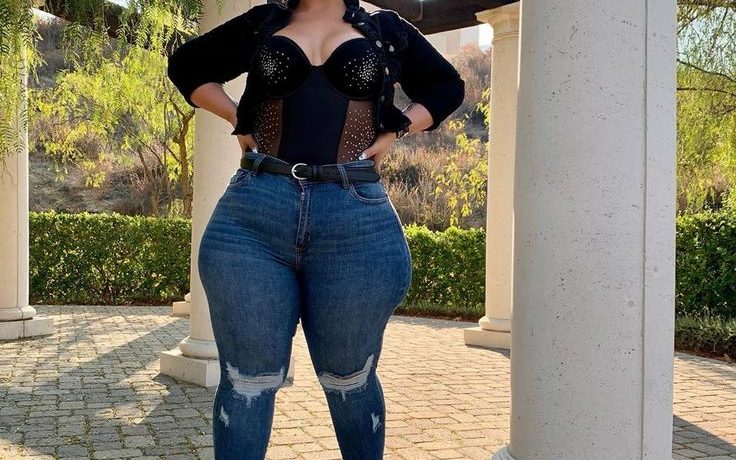
Anyone with full hips, an athletic seat, or a defined waist knows the distinct frustration of trying on a new pair of jeans. You pull them up past your knees, shimmy them over your thighs, and zip them securely over your hips, only to reach behind your back and discover a cavernous opening between the waistband and your lower spine. You can slide your entire forearm into the void.
This maddening gap is not a flaw in your body; it is the direct byproduct of outdated industrial pattern making. For generations, mass-market apparel brands graded patterns using a rigid, standardized ratio that assumed human hips and waists expand at the exact same pace. If your hips require a size 12 to pull on comfortably, standard pattern drafting assumes your waist must also measure a size 12.
Cinching that extra four inches of denim with a standard belt creates an uncomfortable accordion fold of thick fabric that pinches your skin, ruins the line of your shirts, and pulls the back of the pants down every time you sit. Fortunately, the apparel landscape has shifted. A deeper understanding of garment geometry, paired with targeted brand engineering and smart tailoring solutions, can eliminate the waist gap permanently.
The Geometry Behind the Gap: Why Standard Denim Fails
To solve the waist gap, you need to understand the math of traditional jeans. Most mass-market fashion brands cut their denim based on an eight- to ten-inch differential between the waist and the hip. If a pair of jeans has a 30-inch waist, the hips are typically drafted at 38 to 40 inches.
However, many curvy and athletic frames feature a twelve- to sixteen-inch differential. When someone with a 28-inch waist and 42-inch hips tries to shop standard racks, they run into an impossible architectural dilemma. Sizing down to fit the waist means the pants will not make it past the mid-thigh. Sizing up to accommodate the hips leaves four to six inches of excess fabric hovering empty around the lumbar spine.
This gap causes cascading structural issues throughout the garment:
-
Downwards drag when seated: Because the waistband does not anchor securely against the lower back, sitting down pulls the entire rear rise downward, forcing you into constant readjustment throughout the day.
-
Front zipper puckering: When a belt gathers excess denim at the waist, the zipper track buckles outward into an awkward, rigid bulge across the lower abdomen.
-
Flattened rear geometry: Straight-cut jeans lack the pocket angling and seam shaping required to cup rounded glutes, creating unwanted compression across the seat while remaining loose around the waistband.
Eliminating these problems requires garments constructed with three-dimensional curves rather than flat cylinders.
Brands That Actually Engineer for Curvy Proportions
In response to consumer demand, several denim brands have abandoned generic sizing in favor of dedicated curvy collections. These lines are not simply plus-size offerings; they are proportion-specific cuts available across standard and extended numerical sizing, intentionally engineered with smaller waists and expanded hip and thigh allowances.
Abercrombie & Fitch Curve Love
Abercrombie’s Curve Love line has become an industry benchmark for solving the waist gap. Instead of merely widening the legs, the design team adjusted the waist-to-hip ratio by adding an extra two inches of room through the hips and thighs while maintaining the exact, true-to-size measurement at the waist.
The collection also incorporates a contoured waistband that curves slightly inward at the top edge. This subtle tailoring prevents the denim from flaring backward, keeping the waistband flush against your spine whether you are standing upright or leaning over a desk. The Curve Love line spans ultra-high rises, vintage straight-leg cuts, and wide-leg trousers, making it a reliable staple across multiple style aesthetics.
Madewell Curvy
Madewell has long been recognized for its denim quality, but its standard cuts historically favored straighter, narrower silhouettes. The Madewell Curvy collection corrected this by increasing the front-to-back rise differential and carving out significantly more room through the seat.
Madewell jeans are crafted with higher back rises that climb comfortably over the glutes, anchoring the denim firmly at the narrowest part of the back. Their curvy cuts also feature premium stretch-recovery technology. By blending high-grade cotton with small percentages of elastane and polyester, the fabric flexes easily over the widest part of the hip without losing its shape or bagging out at the waistband by mid-afternoon.
Good American
Founded specifically to address fit disparities across diverse body types, Good American built its entire brand identity around eliminating the gap. Their defining construction element is a gap-proof contoured waistband, which features an internal reinforcement layer designed to hug the lower back.
Good American jeans utilize deep, steeply angled back yokes that cup the curves of the body. Their fabric blends lean heavily into high-recovery compression, allowing the jeans to mold comfortably to wider hip circumferences while snapping back securely around a tapered torso.
American Eagle Ne(X)t Level Curvy
For an accessible, budget-conscious option, American Eagle’s Curvy collection offers exceptional performance. Like other dedicated lines, it provides an additional two to three inches of volume through the hip and thigh relative to the waist size.
What sets American Eagle apart is the flexibility of its textiles. Their curvy fits feature mechanical multi-directional stretch, meaning the fabric moves with your stride without tugging the waistband downward. It is an ideal entry point for anyone testing out curvy-cut denim for the first time.
Pattern Features to Look for Off the Rack
If you are shopping outside of dedicated curvy collections, you can still avoid the waist gap by training your eye to recognize structural design elements that accommodate non-linear proportions.
The Contoured Waistband
Standard jeans use a straight waistband, which is cut as a single, flat strip of denim. A straight band works adequately on rectangular body shapes, but it cannot bend around the steep curve of an hourglass waist.
Instead, look for a contoured waistband, which is cut in arcs and assembled from multiple curved panels. When laid flat on a table, a contoured waistband resembles a gentle crescent rather than a straight ruler. This curvature allows the fabric to cup the top of the pelvic bone and wrap closely against the inward slope of the lower spine.
Deep V-Yokes and Sweetheart Seams
The back yoke is the triangular or V-shaped panel of fabric situated between the rear waistband and the back pockets. The depth and angle of this seam dictate how much three-dimensional shape the jeans possess.
A shallow, straight horizontal yoke creates a flat, boxy rear panel. A deep, steeply angled V-yoke or a curved sweetheart yoke acts like a massive tailored dart. It removes excess material from the upper back of the jeans while allowing the lower panels to expand outward, providing built-in pocket space for rounded glutes without disturbing the fit of the waistband.
Optimal Fabric Blends and Weight
Fabric composition heavily influences how a waistband behaves throughout the day. Avoid denim that contains more than four percent elastane or spandex unless it comes from a high-end technical mill. Excessively stretchy denim stretches out rapidly, and the waistband is usually the first area to lose its recovery, widening as you move.
The gold standard for curvy denim is 98% to 99% heavy cotton paired with 1% to 2% high-recovery elastane. The high cotton content provides the structural rigidity needed to hold the waistband firmly in place, while the touch of elastane provides the necessary give over the hips and thighs.
Practical Fixes for the Jeans You Already Own
Replacing an entire wardrobe of denim is neither practical nor immediate. If you have pairs in your closet that fit your legs and hips flawlessly but still gap at the back, several reliable adjustments can resolve the issue.
The Professional Center-Back Alteration
The most permanent and visually seamless solution is to take the jeans to an experienced tailor for a center-back waistband reduction.
A skilled tailor will not simply pinch the excess fabric and sew a straight seam down the middle, which creates an unsightly, bulky ridge. Instead, they will:
-
Carefully remove the rear belt loop and unstitch the waistband from the body of the jeans across the back six inches.
-
Cut open the waistband at the center back, remove the excess two to three inches of material, and rejoin the band using a reinforced flat-felled seam.
-
Take in the upper back rise to match the new, narrower circumference, tapering the adjustment smoothly into the existing yoke seam.
-
Reattach the waistband and re-sew the center belt loop directly over the seam, completely hiding the alteration.
This adjustment typically costs between twenty and thirty-five dollars, instantly turning an off-the-rack compromise into a custom-fitted garment.
The Internal Elastic Method
If you prefer an inexpensive DIY fix that requires minimal sewing, the hidden elastic method is remarkably effective. This technique replicates the adjustable waistbands frequently found in maternity and children’s apparel without altering the exterior look of the jeans.
To execute this fix:
-
Make two small, vertical incisions on the inside layer of the rear waistband, spaced roughly five to six inches apart along the lower back. Be careful to cut only through the inner fabric layer, leaving the exterior denim untouched.
-
Take a piece of sturdy, one-inch wide woven elastic that is roughly three inches shorter than the distance between your cuts.
-
Attach a safety pin to one end of the elastic and thread it through the hollow casing of the waistband from one slit to the other.
-
Secure each end of the elastic firmly to the inner waistband using heavy thread and a tight whipstitch.
The tension of the hidden elastic gently pulls the back of the waistband inward against your lumbar spine, eliminating the open pocket of air while leaving the exterior of the jeans looking completely smooth and unaltered.
Quick-Fix Solutions for Emergencies
When you need an immediate solution before heading out the door, specialized hardware accessories offer a practical alternative to belts. Removable jean buttons (metal studs that attach with a secure locking pin on the back) allow you to create a temporary new button placement two inches to the left of the original hardware.
Alternatively, specialized cinch clips can gather excess fabric at the side seams or center back beneath an untucked shirt. While these methods lack the sleek comfort of a tailored waistband or a true curvy cut, they provide immediate security when you are on the move.
Finding pants that fit both your hips and your waist should not feel like an impossible mathematical riddle. When you move away from generic straight-cut denim, invest in brands that design for real differentials, and utilize targeted alterations for your favorite pieces, the waist gap shifts from a constant daily frustration to a completely solvable problem.