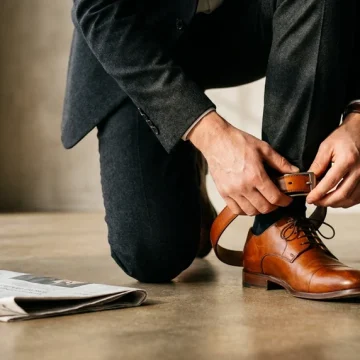

Few style conventions cause as much quiet anxiety in a dressing room as the relationship between a belt and a pair of shoes. Traditional menswear advice often presents the pairing as an inflexible iron law: your belt must match your shoes identically, down to the exact dye lot and sheen. Step into any casual setting, however, and you will see stylish people breaking that supposed rule with complete confidence.
The truth sits comfortably between rigid formality and careless indifference. Matching leather goods is not an exercise in buying carbon-copy accessories; it is an exercise in managing contrast, cohesion, and formality. Once you understand the underlying logic of color families, leather finishes, hardware tones, and overall aesthetics, coordinating your waistline with your footwear becomes second nature rather than a daily puzzle.
The Foundation: Formality Dictates the Degree of Precision
The single most important variable in matching your belt to your shoes is the formality of your outfit. The closer you move toward black-tie or conservative business dress, the stricter the matching requirements become. As your attire relaxes into smart casual, business casual, and weekend wear, the rules soften into guidelines, leaving room for personal preference and intentional contrast.
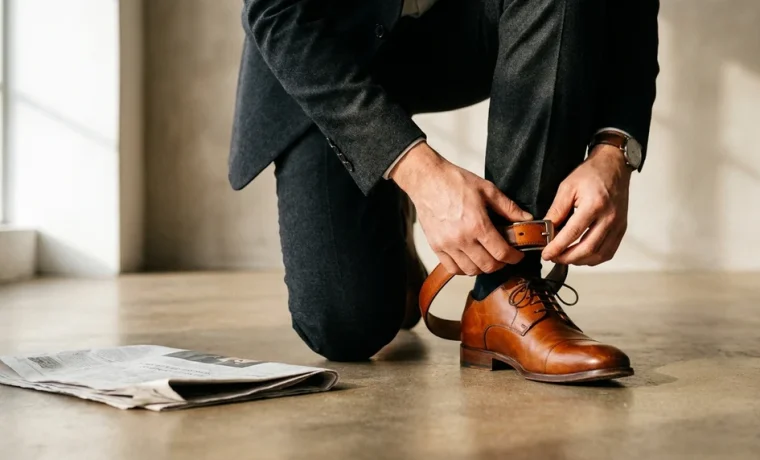
In formal and corporate business settings, your belt and shoes should align as closely as possible. If you are wearing a charcoal or navy worsted wool suit to an executive meeting, a board presentation, or a traditional wedding, your accessories serve to frame the tailoring, not draw attention to themselves. Here, wearing a glossy black leather belt with matte brown oxfords creates an abrupt visual disruption across the midsection that signals oversight rather than sartorial daring.
In casual and creative environments, the objective shifts from matching to harmonizing. Pairing a medium-brown leather belt with walnut brogues or dark chocolate Chelsea boots looks sophisticated precisely because it does not look like you purchased them together in a gift set. In casualwear, strict matching often looks stiff and overly manufactured.
Navigating the Leather Color Spectrum
Understanding leather shades begins with treating colors as families rather than isolated pigments. While black is straightforward, the broader world of brown and burgundy requires a sharper eye for undertones.
Black Leather: The Binary Standard
Black is absolute. When you wear black dress shoes—whether they are cap-toe oxfords, wholecuts, or sleek monk straps—your belt must also be black. There is no gray area here in formalwear.
The only nuance lies in the surface finish. A high-shine, polished calfskin shoe demands a belt with a clean, smooth, semi-gloss face. If you wear casual black combat boots or black minimalist leather sneakers, your belt should still be black, but you can opt for matte finishes, tumbled leather, or heavier full-grain hides with visible grain.
The Brown Spectrum: Tone Over Twin
Brown presents the greatest challenge because no two manufacturers define terms like cognac, tobacco, walnut, espresso, or tan the same way. Trying to find an identical match between a belt from one brand and shoes from another is usually an exercise in frustration—and an unnecessary one.
Instead of hunting for an exact color match, aim for the same temperature and general depth:
-
Dark Browns: Deep espresso, dark mocha, and chocolate leathers share cool, rich depths. They pair effortlessly across variations because the human eye registers them collectively as anchor tones.
-
Mid-Tone Browns: Cognac, chestnut, and walnut feature amber and reddish undertones. Pair these with belts that share that warmth, even if the belt is a shade lighter or darker than the shoe.
-
Light Browns and Tans: Tan, British tan, and camel are high-visibility shades. A common pitfall is wearing dark brown belts with pale tan shoes; the stark contrast cuts your torso in half. Keep light shoes paired with belts in the light-to-medium brown category to maintain visual continuity.
A simple rule of thumb: keep the belt and shoes within two shades of each other on the color spectrum, and ensure their underlying temperatures (warm golden hues versus cool ashy hues) do not clash.
Burgundy and Oxblood: The Versatile Neutral
Burgundy, cordovan, and deep oxblood leathers are often called the workhorses of a thoughtful wardrobe. These deep red-violet tones possess enough depth to pair with navy, gray, charcoal, olive, and brown trousers.
When wearing oxblood dress shoes, an oxblood belt is the ideal companion. However, if you lack an exact match, a very dark chocolate brown belt with subtle warm undertones blends smoothly enough that only the closest observer would notice. Avoid wearing a stark black belt with rich oxblood shoes; the contrast is harsh and drains the warmth from the footwear.
Texture and Finish: The Overlooked Variable
Color matching is only half the battle. If you pair a polished dress belt with heavily textured casual shoes, the outfit feels disjointed even if the colors are identical. Texture carries its own level of formality that must align across your waist and feet.
Smooth Calfskin vs. Textured Leather
Smooth calfskin with a light polish belongs with dress trousers, worsted suits, and formal footwear. Combining a smooth, glossy dress belt with rugged, pebble-grain country boots looks discordant. Pebble-grain, tumbled leather, and pull-up leathers have dimensional texture that pairs best with work boots, derbies, and brogues.
Suede and Roughout
Suede occupies an elegant space within smart-casual style. While you can certainly pair suede shoes with a suede belt of a similar shade, doing so is not mandatory. Suede shoes pair exceptionally well with matte calfskin belts, provided the color depth matches.
The reverse is also true: a chocolate suede belt adds rich tactile contrast to smooth leather Chelsea boots or penny loafers. The absence of shine in suede softens the entire midsection, making it one of the most forgiving materials in a wardrobe.
Woven and Fabric Belts
Braided leather belts, canvas webbing, and needlepoint belts belong squarely in warm-weather, casual, or prep-inspired wardrobes. Braided leather belts pair naturally with boat shoes, driving mocs, and unlined summer loafers. Canvas d-ring belts complement canvas slip-ons, espadrilles, or retro court sneakers. Never wear a woven fabric belt with smooth leather dress shoes.
Metal Hardware: Coordinating Buckles and Details
The metal hardware on your belt buckle should harmonize with the metal elements on the rest of your outfit. This includes your watch case, metal bracelet, rings, tie bar, cufflinks, and any visible hardware on your footwear, such as the buckles on monk strap shoes or brass speed hooks on heritage boots.
-
Silver Tones: Stainless steel, white gold, platinum, and polished chrome provide a clean, modern aesthetic. If your watch has a steel case, a silver-toned belt buckle creates an immediate sense of cohesion.
-
Warm Tones: Yellow gold, rose gold, and solid brass offer a traditional, classic presence. Pair warm-toned buckles with gold watches or footwear with antique brass eyelets.
-
Brushed and Matte Finishes: Brushed nickel, antique pewter, and gunmetal are remarkably neutral. They bridge the gap between warm and cool metals, making them the most versatile choice for everyday wear.
Wedding bands are a notable exception to this rule. A yellow gold or platinum wedding ring is considered permanent personal jewelry and does not need to match your belt buckle or watch case.
Casual Footwear: What to Do with Sneakers and Boots
The rise of high-end sneakers, rugged boots, and slip-ons has rendered old-school rules obsolete for weekend style. How you address matching depends entirely on the shoe silhouette.
White and Minimalist Sneakers
One of the most frequent questions in contemporary menswear is what belt to wear with white sneakers. The answer is unequivocal: never wear a plain white leather belt. Unless you are competing on a professional golf tour, a white leather belt draws an aggressive, unflattering horizontal stripe across your waist.
Instead, let your sneakers act as a neutral foundation. Match your belt to your trousers or your upper layers instead:
-
With dark denim and white sneakers, choose a medium-to-dark brown casual leather belt.
-
With beige or olive chinos, opt for a braided suede, woven fabric, or neutral tan belt.
-
If you are wearing black jeans with white sneakers, a casual black leather belt with a matte finish keeps the palette grounded.
Heritage Work Boots
Rugged boots—such as Moc-toe boots, cap-toe service boots, and combat silhouettes—require substantial accessories. Pairing delicate dress belts with thick leather boots looks flimsy and unbalanced.
Opt for heavy-duty, vegetable-tanned leather belts that are at least 1.5 inches wide, finished with sturdy brass or steel roller buckles. The leather should have character: natural pull-up, raw edges, and visible grain that mirrors the weight and resilience of your boots.
Summer Loafers and Driving Mocs
Loafers worn without socks in warmer weather call for a relaxed approach. You can lean into complementary contrasts: snuff suede loafers pair handsomely with dark brown braided belts, while navy suede drivers work well with light tan or woven cotton belts. The goal is an effortless, lived-in aesthetic.
Proportions and Belt Width
Matching extends beyond color and texture into scale. A belt’s width indicates its intended formality, and wearing the wrong width with your footwear throws off your visual balance.
A standard dress belt measures 1.25 inches (around 30 to 32 millimeters) in width. It features a sleek, minimal buckle, thin leather construction, and tapered ends. It is designed specifically to slide through narrow dress trouser loops and sit flush against tailored fabric.
A casual belt measures 1.5 to 1.75 inches (around 38 to 45 millimeters) in width. It uses thicker, more substantial leather cuts designed to hold up heavier denim, canvas work pants, and corduroy.
Putting a 1.25-inch dress belt on raw selvedge denim above heavy boots looks undersized and frail. Conversely, forcing a 1.75-inch thick utility belt onto the loops of a tailored wool suit trousers looks clumsy and distorts the waistband. Match the weight of the belt to the weight of the trousers, which in turn should match the weight of the shoes.
Everyday Practical Scenarios
To translate these concepts into daily habits, consider how common outfit combinations operate in practice:
-
The Navy Suit with Dark Brown Oxfords: Choose a dark brown, smooth leather dress belt measuring 1.25 inches with a discreet silver-toned buckle. Keep the shine level similar to that of the shoes.
-
The Gray Flannel Trouser with Oxblood Brogues: Wear a rich burgundy or deep reddish-brown leather belt. A brushed brass or satin silver buckle complements the depth of the flannel.
-
Khaki Chinos with Snuff Suede Loafers: Opt for a medium brown suede belt or a dark tan braided leather belt. The shared lack of high polish keeps the look unified without feeling rigid.
-
Dark Raw Denim with Heritage Brown Boots: Select a 1.5-inch full-grain, vegetable-tanned leather belt in rich chestnut or oiled brown, equipped with a durable brass or antique nickel buckle.
-
Black Jeans with White Low-Top Leather Sneakers: Choose a 1.5-inch matte black leather belt with a simple silver or gunmetal buckle. The black belt anchors the jeans, allowing the crisp white sneakers to stand out naturally.
Cultivating an Eye for Balance
Mastering the relationship between your belt and shoes is less about memorizing strict combinations and more about developing an eye for overall balance. Color sets the direction, texture establishes the character, and metal details provide the polish.
When getting dressed, take a step back from the mirror and look at your outfit as a complete composition. If your eyes naturally take in your shirt, trousers, and silhouette without getting snagged on a jarring line at your waist, your pairing works. When in doubt, prioritize matching the formality and texture first; subtle variations in color shade will read as sophisticated ease rather than an error.