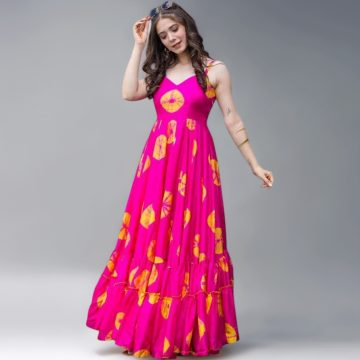



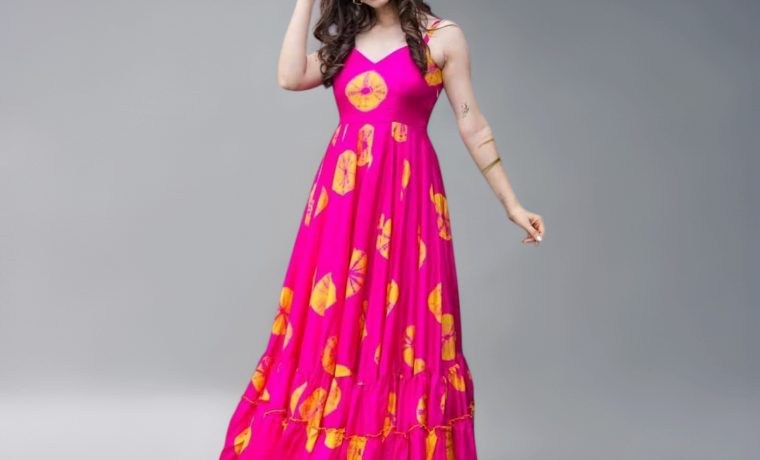
Anyone who stands five-foot-nine or taller knows the specific disappointment of ordering a maxi dress, waiting for it to arrive, and pulling it on only to find the hem hovering awkwardly around the lower calf. Instead of the sweeping, dramatic silhouette promised in the editorial photos, the result looks like an indecisive midi dress or a garment outgrown after a childhood growth spurt.
The issue is not your body; it is the math behind standard garment manufacturing. Mass-market retail is built around a standardized fit model who stands roughly five feet, five inches tall. When clothing brands draft patterns for dresses labeled as maxi length, they engineer the hem to skim the floor on a woman of average height. On a taller frame, that same length loses several vital inches of coverage, disrupting the intended proportions of the entire outfit.
Finding a dress that grazes your ankle bone or sweeps the tops of your shoes requires looking past retail labels and understanding garment construction. By learning how to read garment specifications, identifying accommodating silhouettes, and knowing where your specific vertical proportions lie, you can curate a wardrobe of maxi dresses that genuinely fit your height.
The Geometry of the Problem: Why Standard Sizing Falls Short
To solve the maxi dress dilemma, you have to understand how apparel patterns are drafted. When commercial clothing brands grade a pattern up from a size small to a size large or extra-large, they grade outward rather than downward. Standard grading rules increase the circumference of the bust, waist, and hip, but they rarely add significant length to the garment body.
A standard off-the-rack maxi dress typically measures between 52 and 54 inches from the highest point of the shoulder to the hemline. If you stand five feet, ten inches tall, your body measures 70 vertical inches. Even subtracting roughly nine to ten inches for your head and neck, your shoulder-to-floor measurement sits somewhere between 58 and 61 inches. When you drape a 54-inch dress over that frame, the hem inevitably lands five to seven inches above the floor, cutting directly across the widest point of the calf.
For a true floor-length sweep, tall women generally require a minimum garment length of 58 to 62 inches, depending on shoe preferences and torso proportions. Because traditional retail sizing rarely provides this by default, navigating the market requires a deliberate, measurement-first approach.
Essential Garment Measurements to Check Before You Buy
Relying on descriptive words like “long,” “sweeping,” or “floor-length” on an e-commerce website is a recipe for frequent returns. Marketing teams write descriptions based on the design concept, not the physical reality on a tall frame. The only reliable metric is the actual garment specification chart.
Total Length from High Point Shoulder
Before shopping, take your own baseline measurement using a flexible sewing tape. Stand barefoot with your back against a wall, look straight ahead, and have someone run the tape from the high point of the shoulder (the spot where your neck meets your shoulder seam), straight down across the fullest part of your bust, to the top of your foot.
Keep two numbers in mind:
-
The Flat-Shoe Length: The measurement from your shoulder to the top of your foot, allowing you to wear flats, sneakers, or slide sandals without the hem dragging on pavement.
-
The Heel Length: Your shoulder-to-foot measurement plus the exact heel height of your favorite wedges or boots.
When browsing online product details, look specifically for the finished garment length measured from the high point shoulder (often abbreviated as HPS) or center-back neck. If the product listing does not state the length in inches, proceed with caution or reach out directly to customer service for the flat lay measurement.
Nape to Waist and Torso Proportions
Height does not distribute itself uniformly. Two women who both stand five-foot-ten can require entirely different dress cuts based on where their length resides.
If you have a long torso, your primary struggle is the vertical placement of waistbands. A dress cut for an average-height woman will place the defined waistline or empire seam high across your ribcage, which pulls the skirt fabric upward and steals several inches of hem length. If you have long legs and a short torso, the waist seam may hit your natural waist accurately, but the skirt itself will fail to reach your ankles unless the skirt panel was drafted with extended proportions.
Design Features That Maximize Vertical Length
Certain design details make a dress naturally adaptable to a tall frame, while others make it impossible to achieve a floor-length look. Prioritizing flexible construction elements gives you an immediate advantage.
Adjustable Straps and Self-Tie Shoulders
Dresses featuring wide fabric ties at the shoulders or functional slider straps are an easy win for tall frames. An adjustable strap allows you to lower the entire bodice by one to two inches. This drops the waist seam down to your natural waistline and simultaneously brings the bottom hem down closer to the floor. Look for substantial straps with metal sliders or thick ribbon ties rather than delicate spaghetti straps, which can dig uncomfortably into the shoulder when bearing the weight of a heavy skirt.
Unbanded and Drop-Waist Cuts
Garments with a rigid horizontal waist seam—such as traditional fit-and-flare dresses—lock the proportions in place. If the seam does not align with your natural waist, the fit is compromised everywhere else.
In contrast, column dresses, bias-cut slips, and unbanded A-line silhouettes flow continuously from the underarm to the hem without a fixed waist break. Without a horizontal seam anchoring the dress to the wrong part of your torso, the fabric cascades naturally, allowing the full length of the cut to translate directly into hem coverage.
Tiered Bohemian Skirts
Tiered maxi dresses are exceptionally forgiving for tall women. The horizontal breaks between the tiers create an optical illusion that balances long limbs, preventing the garment from looking like an unbroken column of fabric. More importantly, tiered skirts are easier for tailors to modify. A skilled tailor can seamlessly insert a coordinating tier of fabric, contrasting ribbon, or delicate lace banding between existing sections to add three or four inches of custom length without ruining the original design.
Deep Hems and Seam Allowances
Before returning a dress that falls just an inch or two short, inspect the underside of the bottom hem. High-end and mid-tier garments often include a two-to-three-inch folded hem allowance to give the fabric weight. A tailor can let down this folded fabric and finish the raw edge with a narrow baby hem or bias tape facing, instantly recovering up to two inches of length that were tucked away inside the garment.
Fabric Choice: The Gravity Factor
The behavior of the textile plays an understated role in where a dress hem actually sits throughout the day. Fabric weight interacts directly with gravity, either stretching downward or billowing outward.
Dense, fluid materials with substantial drape are ideal for tall silhouettes:
-
Heavy rayon, viscose, and modal knits: These fibers carry physical weight. When you put the dress on, the downward pull of the fabric naturally lengthens the garment, coaxing the hem closer to the ground without clinging awkwardly.
-
Mid-weight linen blends: While pure linen can be stiff and lightweight, linen blended with viscose or tencel retains structure while falling smoothly toward your feet.
-
Bias-cut silk and satin: Fabric cut on the bias (diagonally across the grain) naturally narrows against the body and elongates as it hangs, providing valuable extra length.
Conversely, stiff or ultra-lightweight materials work against height. Crisp cotton poplin, stiff organza, and featherlight synthetic chiffons flare away from the body rather than dropping downward. This outward volume reduces vertical reach, causing the hem to sit higher than it would in a more fluid textile.
How to Read Online Product Pages Like an Insider
E-commerce websites frequently use subtle styling tricks to mask short dress lengths on their models. Developing a critical eye for product photography prevents buyer’s remorse.
First, always check the listed model height. Most commercial fashion models stand between five-foot-nine and five-foot-eleven. If a model is five-foot-ten and the dress is pooled gracefully on the floor around her feet, check whether she is wearing shoes. Stylists often shoot tall models barefoot or seated to make dresses appear longer than they are. If a five-foot-ten model is wearing flat sandals and the dress stops right at her ankle bone, expect that same dress to fit even shorter if you carry any fullness through your hips, glutes, or bust, as curves consume fabric length.
Second, understand the difference between extended sizing and tall collections. A plus-size or extended-size dress simply scales outward in circumference; it is rarely drafted longer in the torso or inseam. A true tall specialty collection, by contrast, fundamentally re-engineers the garment: the armholes are lowered, the waist seam is dropped by one to two inches, the bust apex is adjusted, and four to six inches of length are added to the skirt. Whenever possible, buy from brands that offer dedicated tall categories rather than attempting to size up in standard lines.
Intentional Styling for Borderline Lengths
Even with careful shopping, you will occasionally fall in love with a dress that measures 56 inches—hovering just above the ankle bone rather than sweeping the floor. When this happens, success comes down to intentional styling.
A dress that hits slightly above the ankle only looks accidental when paired with shoes that emphasize the gap, such as high-heeled pumps that leave your entire foot exposed. To make a borderline length look purposeful:
-
Anchor the hem with ground-skimming footwear: Pair the dress with sleek pointed-toe flats, flat minimalist leather slides, or chunky flat-soled sandals that ground the silhouette near the floor.
-
Introduce tall leather boots: In transitional weather, layer tall boots beneath the skirt. When the top of the boot disappears under the hemline, the eye perceives a continuous, unbroken vertical line, completely hiding where the skirt ends.
-
Embrace ankle-wrap straps: Lace-up gladiators or wrap-around ankle straps fill the visual void between your ankle and the hem, transforming an awkward gap into a deliberate frame for your footwear.
Finding clothes that honor your height should never feel like an endless series of compromises. When you ignore arbitrary sizing tags, prioritize verifiable measurements, and seek out silhouettes built on fluid drapes and adaptable tailoring, a true, floor-skimming maxi dress stops being an elusive retail miracle and becomes a reliable staple in your wardrobe.