



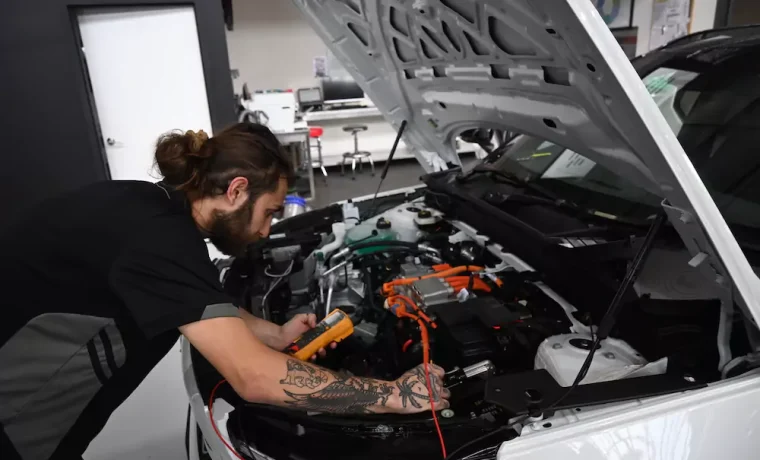
Hybrid and electric vehicles (EVs) operate under fundamentally different systems than internal combustion engine (ICE) cars. Repairing and servicing them requires specialized knowledge, tools, and workflows. In the U.S., independent and dealer-affiliated repair shops are increasingly offering hybrid/EV services to meet a growing demand. This article explores in depth the services that a well-equipped auto repair shop should offer for hybrid and electric vehicles, the challenges and standards in the industry, and how owners can choose the right provider.
The phrase auto repair shop services for hybrid and electric cars refers to all maintenance, diagnostics, and repair operations specifically tailored to hybrids and EVs—so you’ll see this anchor used naturally in this article.
Why Hybrid/EV Repair Is Distinctive
Hybrids and EVs blend electrical, electronic, and mechanical systems. Their complexity is higher than ICE cars in several domains:
- High-voltage systems: Battery packs, inverters, auxiliary DC/DC converters.
- Thermal management: Cooling of battery packs, power electronics, and sometimes individual module cooling.
- Regenerative braking systems: Interplay between mechanical brakes and energy recovery circuits.
- Software and firmware updates: Control units, battery management systems, and communications across modules.
- Safety protocols: Working safely around high-voltage circuits demands insulated tools, safety training, and strict lockout/tagout procedures.
Given these specialized aspects, a shop must combine conventional auto-repair competencies with deep expertise in electric powertrains.
Core Services Offered by a Hybrid/EV Auto Repair Shop
Below is a breakdown of essential services that a full-scope shop should provide, with technical depth and practical detail:
1. Diagnostic Testing & Electrical System Health Checks
- Battery State-of-Health (SOH) testing: Measure capacity, internal resistance, cell balancing, and degradation.
- Module-level diagnostics: Pinpoint weak or failing battery modules.
- Inverter and power electronics testing: Inspect voltage conversion, gate drivers, and insulation resistance.
- High-voltage cable and connection inspection: Check for corrosion, damage, or insulation breakdown.
- 12V auxiliary systems testing: The low-voltage side still supports many car systems (lights, HVAC, infotainment).
Performing diagnostics is the first step—without it, repairs or replacements may be misdirected.
2. Battery Repair, Conditioning, and Replacement
- Battery conditioning / rebalancing: Some shops remove the battery pack and cycle modules to recondition them, replace underperforming modules, and restore balance. This can delay a full pack replacement.
- Battery pack replacement: Installing a new or refurbished pack with proper cooling, wiring, and software integration.
- Battery module replacement: In cases where only certain modules are failing, replacing them individually (when possible).
- Extended warranties / warranties on battery work: Many specialist shops offer warranties on refurbished components to give customers confidence.
3. Thermal Management & Coolant System Maintenance
- Coolant flushing and refill: Many hybrid/EV power electronics use dedicated coolant loops; periodic replacement is vital.
- Pump and hose inspection or replacement: The pumps or hoses servicing battery/inverter cooling can fail.
- Temperature sensor calibration and replacement: Sensor integrity matters for thermal balancing and safety.
4. Brake System & Regenerative Braking Integration
- Brake pad and rotor inspection: Even though regenerative braking reduces brake wear, the conventional braking system still must be maintained.
- Caliper and actuator service: Hydraulic components may need rebuild or replacement.
- Regeneration calibration: Ensuring the braking control software is tuned correctly for energy recovery versus friction braking.
5. Suspension, Steering, Tire & Wheel Services
- Tire rotation and alignment: The additional mass from battery packs can accelerate tire wear; regular rotations help spread load.
- Wheel balancing and alignment: Precision alignment is necessary to prevent unwanted drag, which negatively affects range.
- Suspension system inspection: Springs, shocks, control arms, bushings—these wear parts remain essential.
- Steering and chassis diagnostics: Same as ICE vehicles—but the heavier weight can shift tolerances.
6. Software Updates, Firmware, and Control Module Reprogramming
- Over-the-air (OTA) or wired updates: Update control units (ECUs, BMS, inverter firmware) to latest factory releases.
- Calibration procedures: After replacing modules or sensors, calibration is necessary (e.g. torque sensors, current sensors).
- Diagnostic trouble codes (DTC) resolution: Clearing and diagnosing fault codes that may arise from the electric subsystem.
7. HVAC, Heating, and Climate Control Systems
- Heat pump or electric heater maintenance: Some EVs use heat pumps instead of resistive heaters; these need inspection, refrigerant charge, or compressor service.
- Cabin HVAC checks: Air filters, blower motors, and refrigerant systems must still operate efficiently.
- Battery thermal preconditioning checks: Some systems pre-heat or pre-cool the battery prior to driving to optimize performance.
8. Charging System & Plug / Connector Services
- On-board charger diagnostics: Evaluate and repair the charger module that converts AC grid power to DC for the battery.
- Connector and cable inspection: Ensure the connector pins, insulation, and contacts remain intact.
- Portable charger / Level 1 / Level 2 diagnostics: Some shops even inspect the customer’s portable charger or charge cable.
- Charging station compatibility checks: Confirm the vehicle charges seamlessly with local charging infrastructure.
9. Cooling & Thermal Systems on Drivetrain Components
- Transmission / reduction gear cooling: Some hybrids have gearboxes or inverters needing cooling circuits.
- Oil changes or lubricant servicing: Though simpler than ICE vehicles, some hybrid components still require grease or oil.
10. Warranty and Recall Service / Integration
Many hybrid/EV vehicles have manufacturer warranties, software recalls, or extended-service campaigns. A shop offering:
- Certified warranty repair
- Recall handling
- OEM parts sourcing
- Integration with manufacturer systems
has a competitive advantage and builds trust with customers who want to maintain full warranty compliance.
Infrastructure and Tools Required
A shop that aims to be credible in auto repair shop services for hybrid and electric cars must invest in:
- Insulated tools and high-voltage safety equipment (gloves, boots, meters rated for high voltage)
- Dedicated diagnostic software platforms for EV / hybrid systems
- Thermal imaging and insulation testers
- High-voltage battery work bays with safety barriers
- Battery test benches / module cycling stations
- Cooling system service rigs
- OTA update interfaces or OEM communication tools
- Parts inventory for batteries, inverters, connectors, sensors
Without these, a shop is limited to minimal services and may not safely or accurately address complex repairs.
Challenges & Best Practices in Hybrid/EV Repair
Safety and Training
Handling high-voltage systems demands rigorous safety protocols. Technicians must be trained in:
- Lockout/tagout procedures
- High-voltage system de-energization
- Personal protective equipment (PPE) usage
- Emergency protocols (e.g., shocks, fire)
Failing to follow standard safety practices can be catastrophic.
Parts Availability & Cost
EV and hybrid parts are often proprietary and expensive. Inventory management and reliable supply chains are crucial. Some shops mitigate costs by refurbishing modules or sourcing quality used parts (with caution and warranty coverage).
Software Access and OEM Cooperation
Some repairs (especially battery, BMS, firmware updates) require access to OEM tools and proprietary software platforms. Independent shops may need licensing agreements or third-party tools to keep pace with manufacturer proprietary systems.
Customer Trust & Transparency
Because EV/hybrid repair is still specialized, many customers may be unfamiliar with technical jargon. Shops should:
- Provide clear inspection reports
- Break down diagnostics vs replacement recommendations
- Offer warranties or guarantees on work
- Use transparency in pricing
These practices help overcome the “mystery box” perception that often plagues high-technology auto repair.
Staying Updated
The EV/hybrid space evolves rapidly. New battery chemistries, cooling topologies, and software architectures demand continuous technician training and investment in tools.
How to Choose the Right Hybrid/EV Repair Shop
If you own a hybrid or electric car and must select a repair provider, consider:
- Certifications & training: ASE, manufacturer-specific training, and hybrid/EV credentials.
- Service scope: Does the shop cover diagnostics, battery work, software updates—not just tire/brake service?
- Tooling and safety infrastructure: Ensure visible safety practices and specialized equipment on site.
- Warranty & guarantees: Shops that offer warranties on battery repairs or module replacement inspire confidence.
- OEM compatibility: Access to software, parts, and recall databases.
- Reputation & reviews: Seek feedback from other hybrid/EV owners or communities (forums, social media).
- Transparency: Shops that explain diagnostic reports, show failed components, and provide multiple options tend to be more trustworthy.
As one enthusiast observed online:
“You’ll generally need a hybrid-specialist or dealership for things like changing the traction battery, changing inverter coolant, or when the inverter goes bad. But many other things any capable mechanic can handle.”
This underscores that not all tasks demand specialty shops—some shops can perform routine work if they understand the hybrid’s systems. (From a forum discussion)
Real-Life Examples of Hybrid/EV Service Shops
- King of Hybrid & EV Auto Repair (California): Specialized shop offering battery reconditioning, inverter repair, and warranty on battery modules.
- Mile Hybrid Automotive (Denver): Focuses on battery replacement and full hybrid/EV service.
- Good Works Auto Repair (Tempe, AZ): Provides a wide range of hybrid maintenance including coolant service, diagnostics, software updates.
- Firestone Complete Auto Care has begun to advertise hybrid/EV services as a mainstream offering.
These examples show the diversity of business models—from boutique specialist shops to established chains adapting to the EV era.
Frequently Asked Questions (FAQ)
Q. How often should a hybrid or EV get serviced?
A. That depends on the manufacturer schedule, but key inspections (coolant, brake system, software updates) often occur every 12,000 to 15,000 miles (or annually). Battery diagnostics may be done every few years or after any indication of performance decline.
Q. Do hybrid/EVs need oil changes?
A. Yes—if your hybrid includes an internal combustion engine. The ICE component’s oil and filters need standard maintenance intervals just like a regular car.
Q. Can I take my hybrid/EV to a regular auto repair shop?
A. You can for basic work (tires, suspension, general electrical). But complex tasks—battery servicing, inverter repair, software updates—are best handled by shops with hybrid/EV specialization.
Q. What’s the lifespan of a hybrid or EV battery?
A. Many battery packs last 8–15 years or more, depending on usage, climate, and charging habits. But individual modules within packs may degrade earlier, and sometimes replacement or conditioning becomes necessary.
Q. How expensive is battery pack replacement?
A. It can range from a few thousand dollars (refurbished or module-level repair) up to $10,000+ for OEM packs, depending on vehicle model, battery size, labor, and software requirements.
Q. Is battery conditioning safe?
A. Yes, when performed by skilled technicians in appropriate facilities. Conditioning work often includes deep cycling, balancing modules, and replacing weak modules, extending pack life without full replacement.
Q. Do I need to update software myself?
A. Not typically. A competent hybrid/EV repair shop will handle software and firmware updates during servicing, either OTA or via wired OEM tools.
Q. Can independent shops do warranty or recall work?
A. Only if they are certified or approved by the manufacturer. Otherwise, such work is reserved for authorized dealers or specialty shops with OEM contracts.